The Process: How the Aberystwyth Student Team Went About Creating the AND Archive
Post 2, by Aine Hawthorne (Archive Masters student at Aberystwyth University)
Creating an archive out of loose papers, binders, and folders stored in old cardboard boxes may seem like a daunting challenge to undertake. When we—a small team of six Aberystwyth University students—received the Anglo-Norman Dictionary (AND) records, we knew that we would have to have a methodical approach towards creating a cohesive archive that represents the creation of the AND. Our goal was to create an archive that would accurately and succinctly show how the AND was created on an intellectual level, including some of the challenges that the team faced. Our intent is for the archive to be a useful resource for its users and researchers, and to allow them to find what they are looking for without becoming overwhelmed.
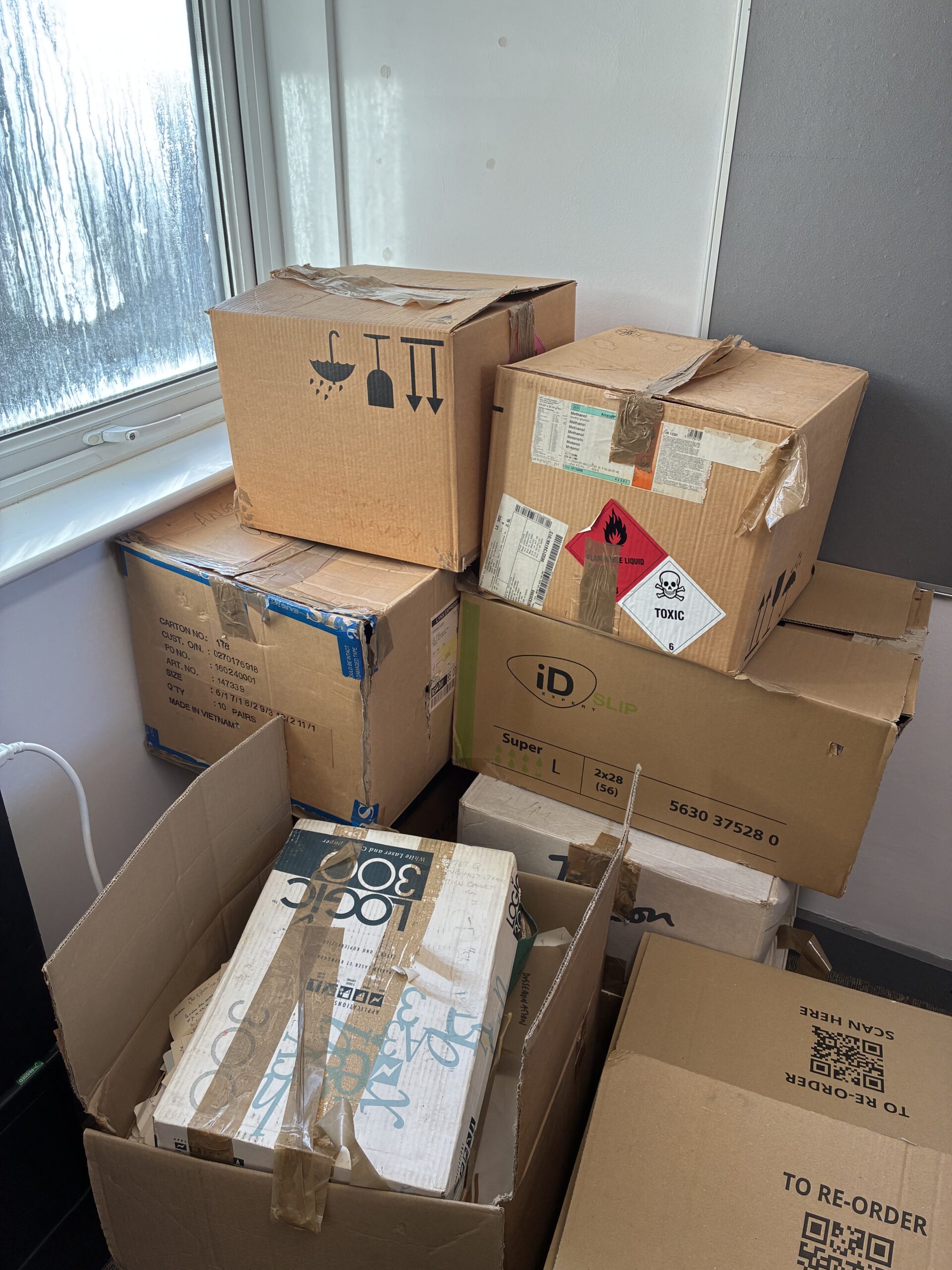
When the records arrived to us, they were in a variety of binders, folders, and boxes. Some had labels, but primarily the exact contents were a mystery to us. Our first step, therefore, was to take stock of what exactly we had by creating box lists on Excel. To make them, the team went through each box, binder, and folder, and taking note of what types of records were contained within (such as dictionary pages, notecards, invoices, and correspondence). The box lists helped us to identify key record themes and to gain an accurate view of what types of records were included in the collection, what they were with, and where they were.

Once the box lists were completed, the team was able to turn its attention toward appraisal. Through the appraisal process, we decided what records were to be kept in the collection and which were to be appraised out. Some items needed to be appraised out of the archive because they did not fit the scope of the archive’s purpose, while others legally needed to be safely disposed of. It was important that we adhered to the scope of the archive to ensure that we created one that was easy to use and not bogged down by records that would not be useful to a future researcher.
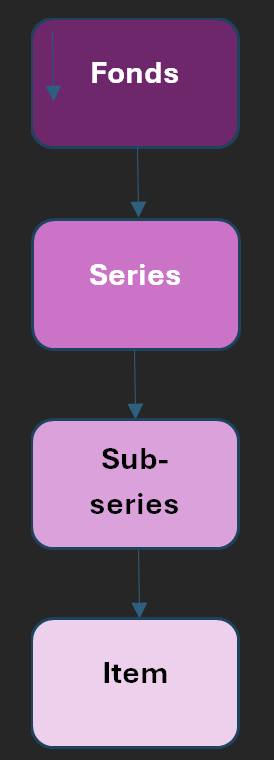
With the appraisal completed, it was time for the team to move on to deciding how the collection should be arranged. The collection is arranged in a hierarchical way with the fonds level at the top, series level beneath them, sub-series level under the series level, and in some cases, item-level records. We decided to make the series based primarily off of the different stages of the AND and kept to original order where it made sense. We decided not to make item-level arrangements for every record as we did not feel that would be a good use of time and resources considering the way in which the archive will be used.
After the records were sorted into their hierarchical arrangement, metadata and descriptions could be created for them. To make and record the metadata for the collection, we created a template in Excel which will be searchable and easy-to-use and export if necessary. We decided to use ISAD(G) to make our metadata and description so as to adhere to a well-known and tested standard.
The final process of this archive project was to package the records according to our arrangement. Another post on packaging will cover that process as well as how we decided on the packaging we chose. The process of creating this archive involved some trial and error as well as careful planning and scheduling. Working well together as a team, we were able to create an archive that we are proud of and feel confident fairly represents the creation of the AND and fulfils the needs of future researchers and users of the archive.