Challenges of Archiving: Maintaining Original Order
Post 3, by Stephanie Rhodes (Archive Masters student at Aberystwyth University)
One of the main principles followed for cataloguing an archival collection is original order. This is the theory that records should be kept as they were organised by their creator. The purpose of this is to maintain the original context of each item. Items kept together in the same file were probably put there for a reason. Maybe it followed a date order, or the content was similar, or it aided the owner’s workflow, for example, documents found on the top of a pile might have been used more frequently. For whatever reason, it’s good practice to keep thing how you found them. However, things aren’t always as simple as that.
For the Anglo-Norman Dictionary collection, we first had to understand its contents and order. By looking through the documents, which came to us as loose paper, files, folders and boxes, we discovered that the collection came from multiple creators (namely David Trotter, William Rothwell, and Andrew Rothwell), therefore the organisation was not consistent throughout the entire collection. This presented us with a challenge: how do we figure out what the original order is, and how do we maintain it?
We started by looking through the collection piece by piece, reading the contents to understand the context. In the end, we organised the collection into five series: AND1, AND2, OnlineHub, Publications, and Dictionary Samples. As the collection mainly contained correspondence, which are dated, we could easily organise the documents within files into chronological order. The name of the sender/receiver of the correspondence is also present on many of these documents, so figuring out the original owner of the files was also plausible, which provided more context for the catalogue. The rest of the pages in a file often could be linked to the correspondence, such as the result of a meeting or applications for grants, and can be used for figuring out where they should be placed within the file even if they didn’t contain a date.
Not all the files contained correspondence, although this did make up the majority. Particularly in the Online Hub series, there were folders relating to digitisations request and funding applications or grants. Handily these came together, so they stayed together! Initially, we were considering removing documents from the correspondence folders if they could fit in others. However, this could remove the context from the correspondence or the original use of the folder. Therefore, we decided to leave it as it was, protecting its original order.
We found many items which were out of our scope. For example, birthday cards, personal letters and personal reference requests. The archive was aiming for this collection to show the development of the dictionary, rather than to provide such personal information about the people who worked on it. This significantly cut down the amount of material we had, which made it easier to organise and find the original order.
Here is part of the collection from the AND2 series; multiple files from multiple people and contexts.
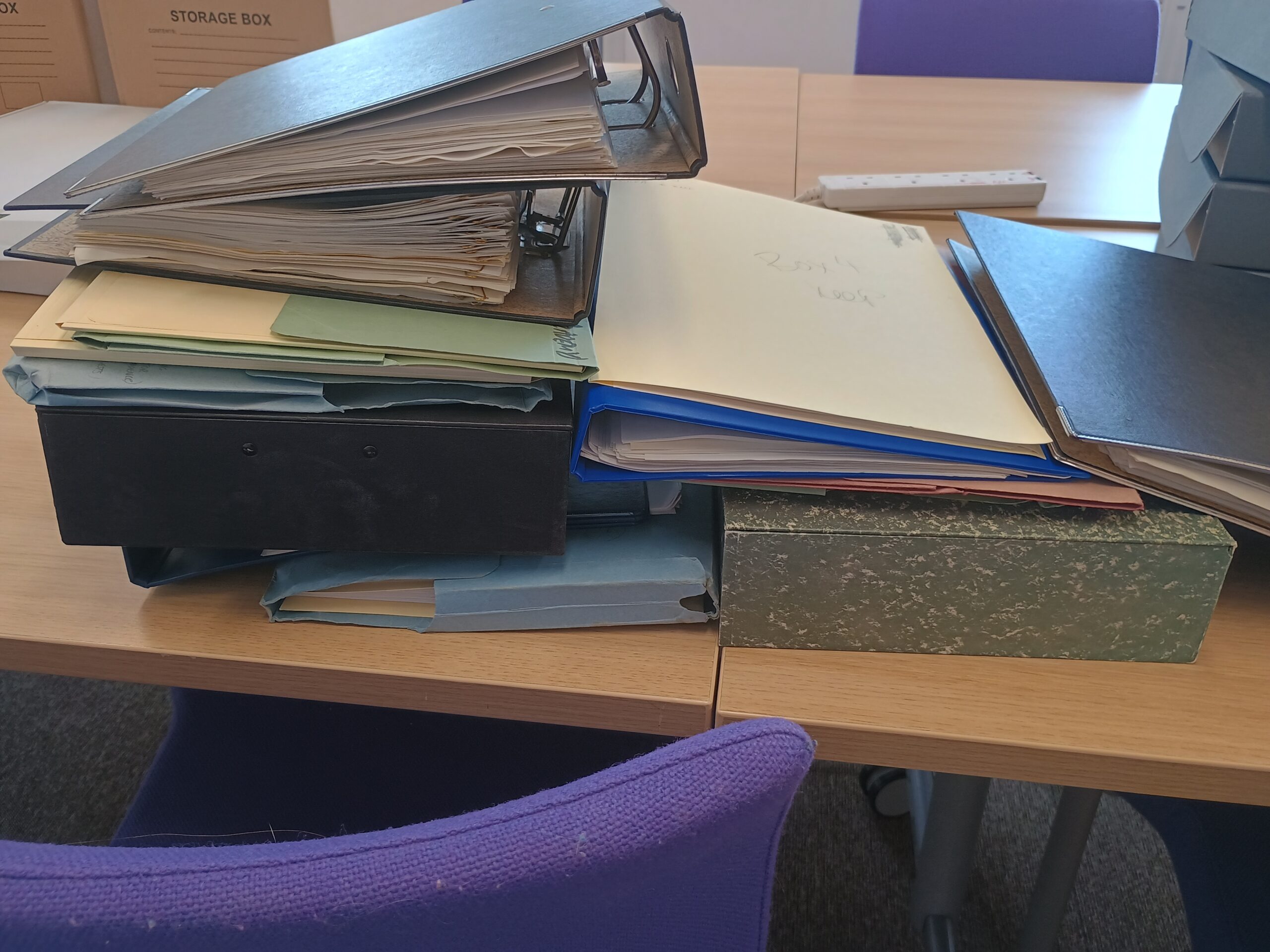
We went through each of these files, removing any material which was out of scope and making sure they were arranged in date order, repackaged them and turned it into this:
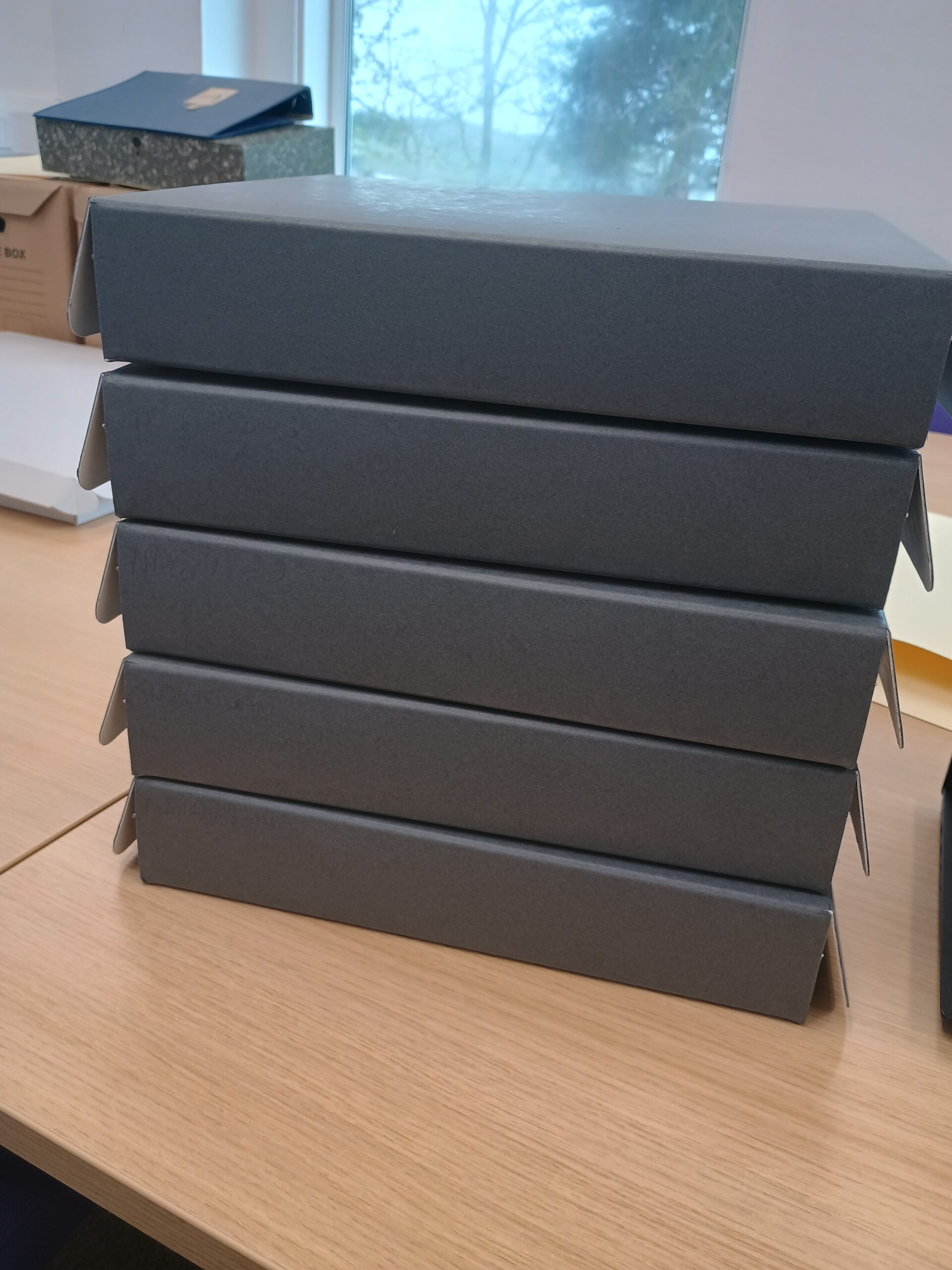
Fourteen files turned into seventeen archival folders and places into six neat archival boxes! (Some of the files had so much paper that they wouldn’t fit into just one folder, but they have all been clearly labelled to make sure they stay together). Original order maintained, and archival storage achieved.