Materials from the AND archives
Post 5, by Maddie Bousfield (Archive Masters student at Aberystwyth University)
My name is Maddie, and I’m an Archives and Records Management master’s student at Aberystwyth University. From February to May I have been part of a small team of students archiving material from the Anglo-Norman Dictionary. In this blog, I would like to share with you some of the material in the archive and explore why it is valuable to the history of the AND.
Dictionary pages The best place to start is with dictionary pages. We received several boxes of draft pages of the AND, many of which were heavily annotated.
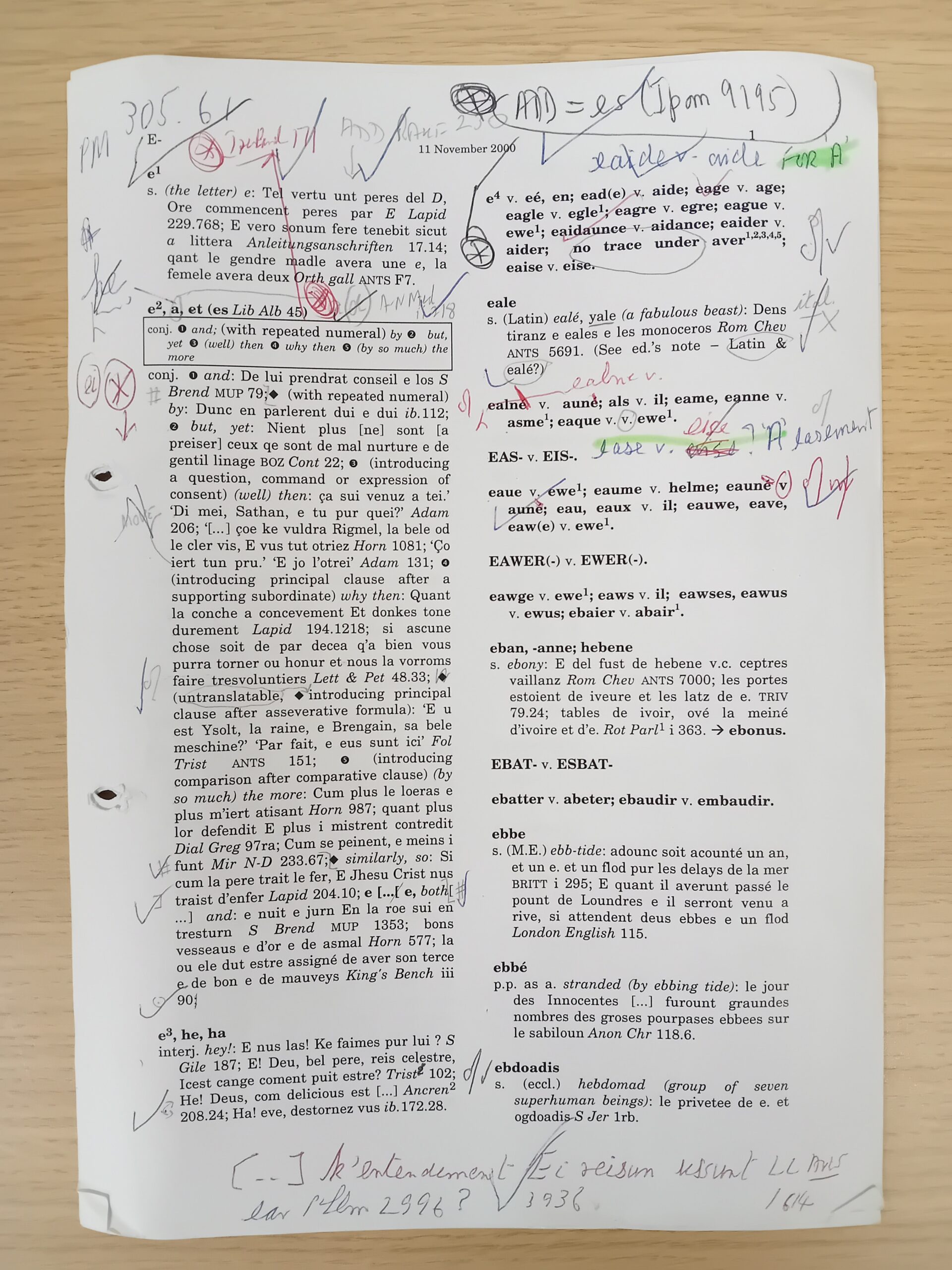
This is a draft page of Volume 2 of the AND 2nd edition, dated 11 November 2000. At this time the 2nd edition and the Online-Hub were being developed simultaneously.
Draft pages are very valuable to project archives. They preserve evidence of changes, additions and discarded material. They also give us insight into the working process behind a project, revealing how and why decisions were made. This AND draft page from 2000 was annotated in several pen colours, indicated multiple people reviewed this one page – and there are over 1000 pages in the second edition!
Index Cards
Before dictionary pages could be compiled, Anglo-Norman words had to be recorded from source material. We have plenty of evidence of this meticulous work in the form of index cards. For a more in depth look at these records, please see Kara’s blog in this series. For now, these photograph shows the amazing quantity of index cards we received in February.
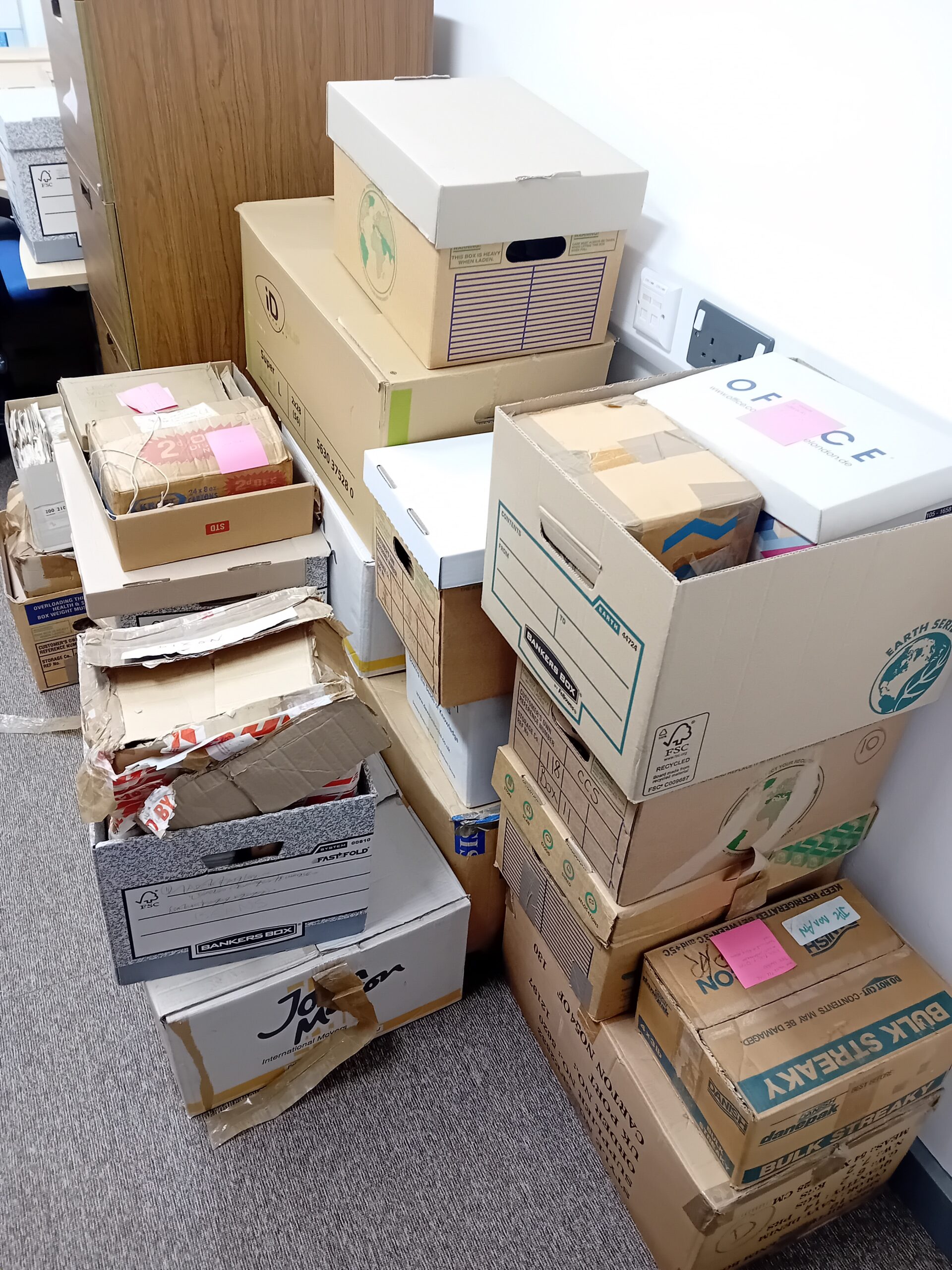
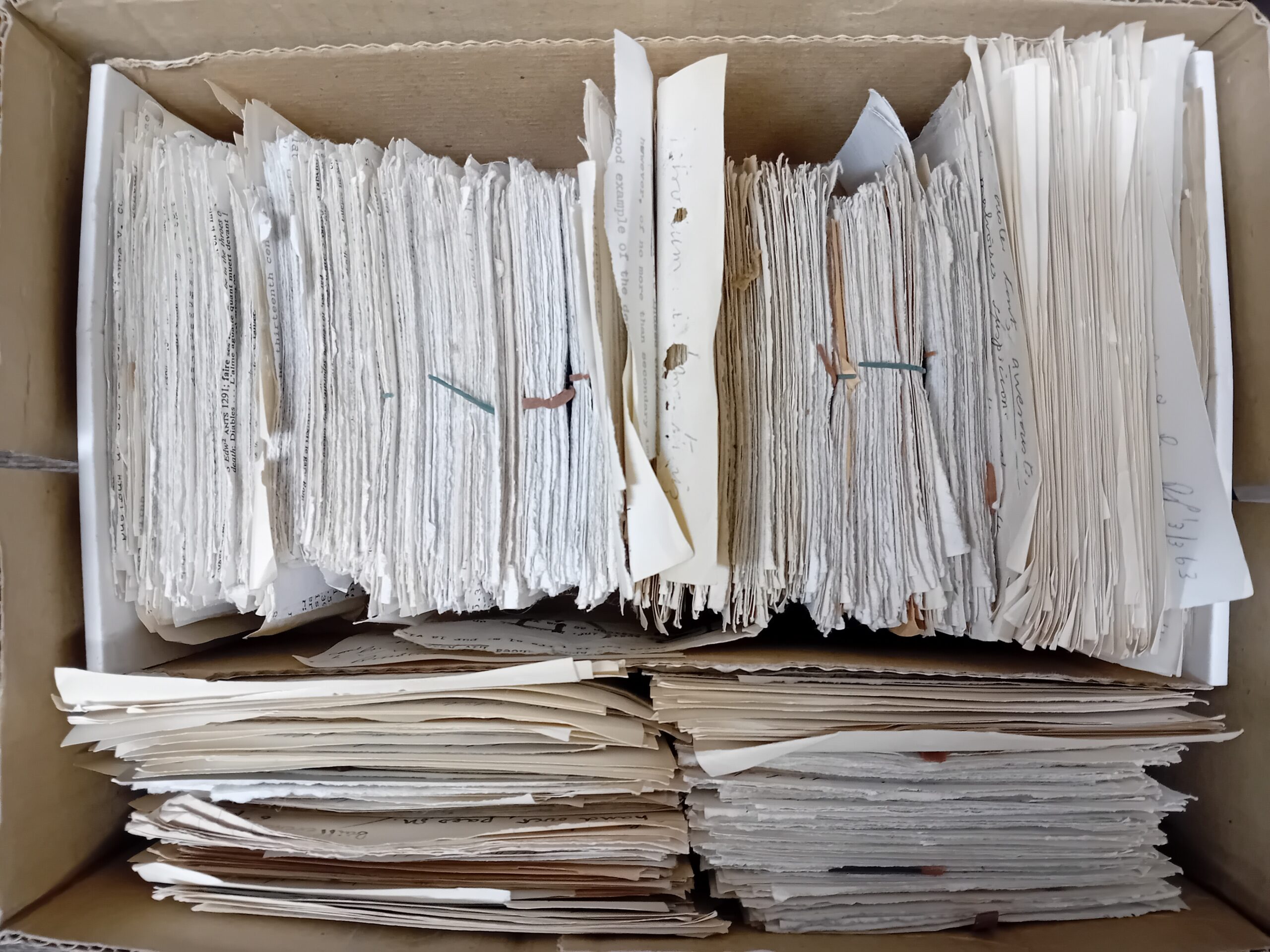
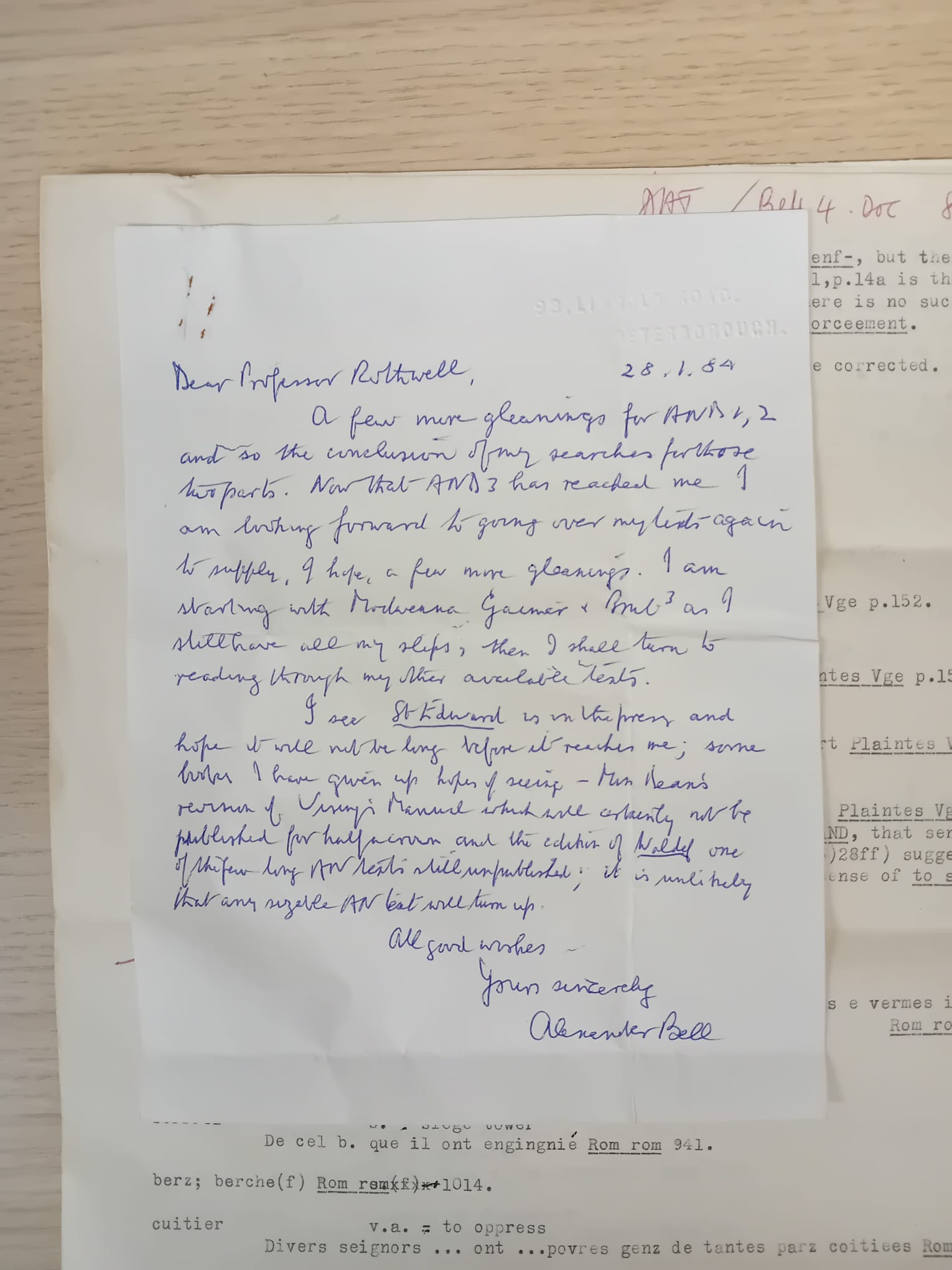
Among these are index cards and correspondence sent to the AND project from Anglo-Norman specialist Alexander Bell between 1972-1984. Dr. Bell’s correspondence explains his ‘gleanings’ from Anglo-Norman source material and give a personal touch to the work that has gone into the project.
Grant applications
There are several draft funding applications in the AND archive, like this one to AHRB in 1998. This grant application was for the development of volume 3 (letters F-L) of the AND between 1999-2004.
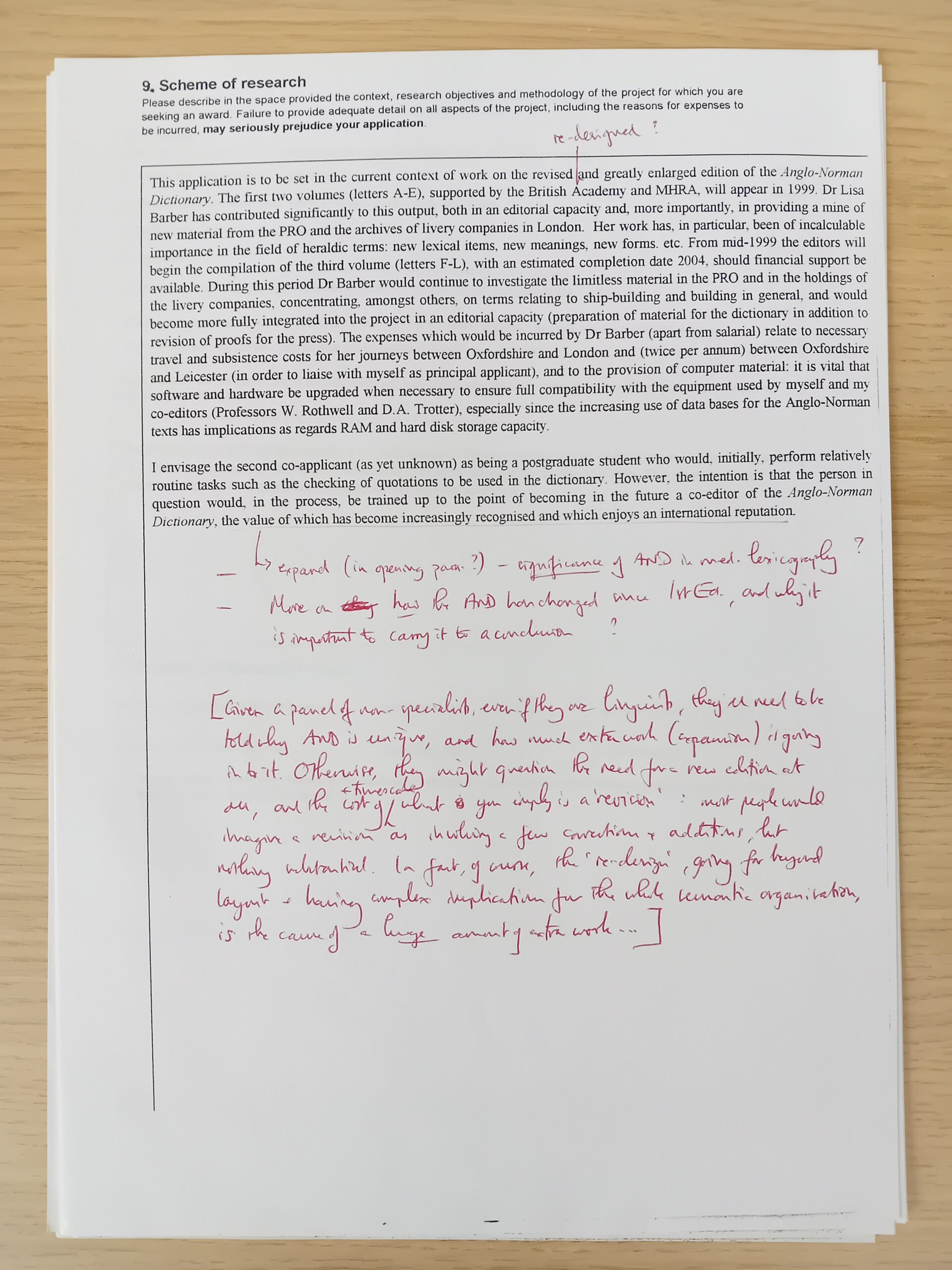
Applications have twofold value to project archives. They preserve a record of administrative and financial decision-making and help us to understand changes to a project’s scope and goals.
Many of the draft applications in the AND archive are annotated. These annotations show us how the AND team defined and advocated for their work over time. For example, the 1998 AHRB application was revised to emphasise the project’s uniqueness and the scale of the 2nd edition. It also reveals that there was a growing need for new computer hardware and software, which hints at how changing technology in the 1990s was impacting the dictionary project.
[AND Note: this particular grant application was not successful, and work on F only started in 2003.]
Correspondence
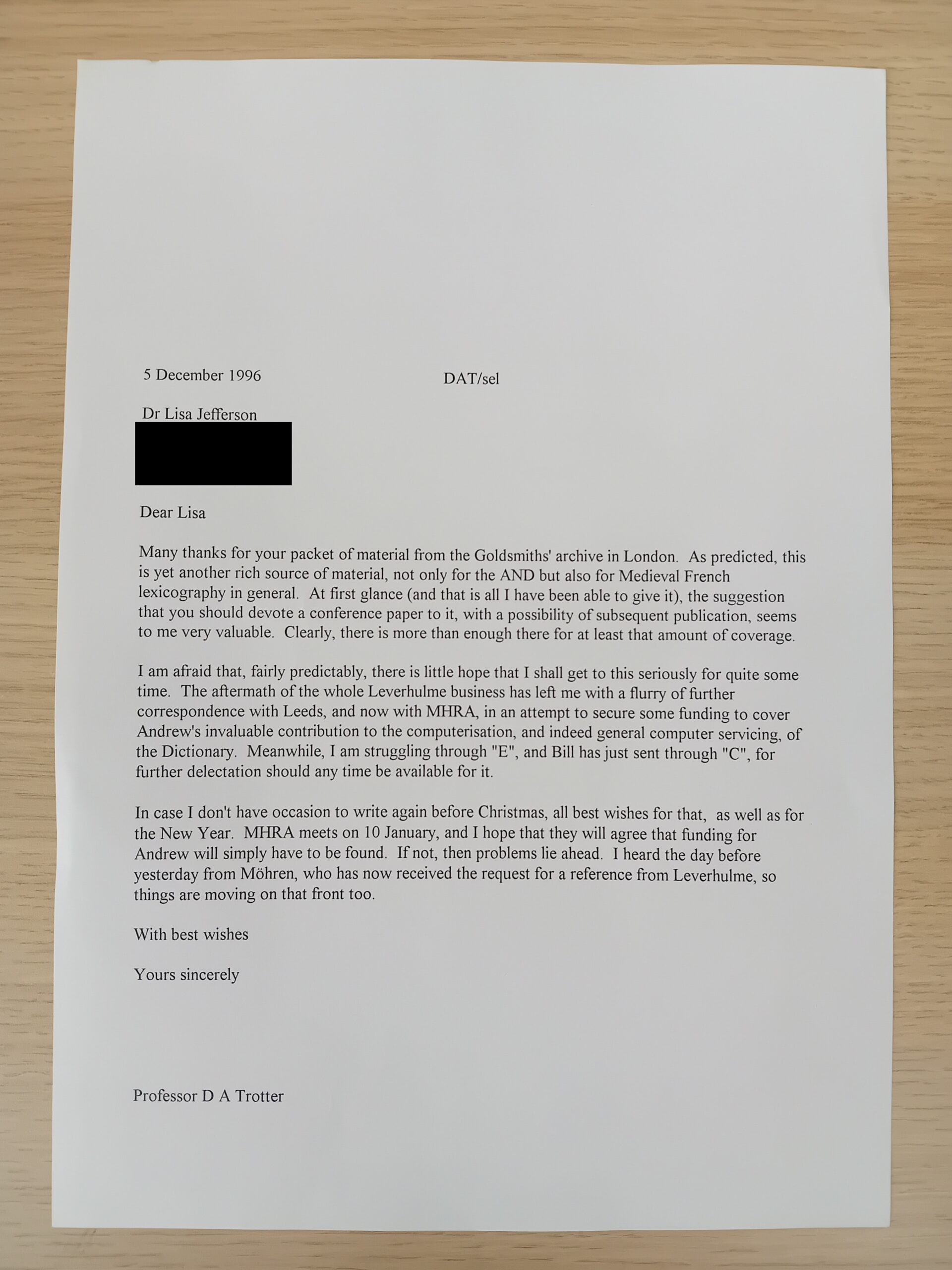
Correspondence makes up the largest part of the material we received. Most correspondence is printed emails and relates to the AND 2nd edition volumes 1 and 2, and the Online-Hub. There is also plenty of handwritten and typewritten correspondence in English, French, German, and Italian.
The volume of correspondence in the AND archive means we can often pair correspondence with other records. Personal experiences do not often appear in official records, so the correspondence has allowed us to discover a social context we would not usually get from official records alone.
I hope this has been an interesting peek into the material produced by the AND project. Thank you to the AND team for entrusting us with their collection. This has been a great opportunity to gain practical archiving experience, and it has been fascinating to discover how the AND has developed from the 1940s to today.